Day to day life
What does living in a care home actually look like? It varies more than people expect — which is exactly why it’s worth asking about. This guide covers the rhythms of a typical day and the things that tell you whether a home has real life in it.
The shape of a day
Good homes fit the day around the person, not the other way round: when to get up, how to take breakfast, what to join in with and what to skip. Expect a mix of organised activities — exercise, music, crafts, quizzes, outings — and unstructured time in lounges and gardens. When you visit, ask to see this week’s actual activity plan rather than the brochure version.
Food and mealtimes
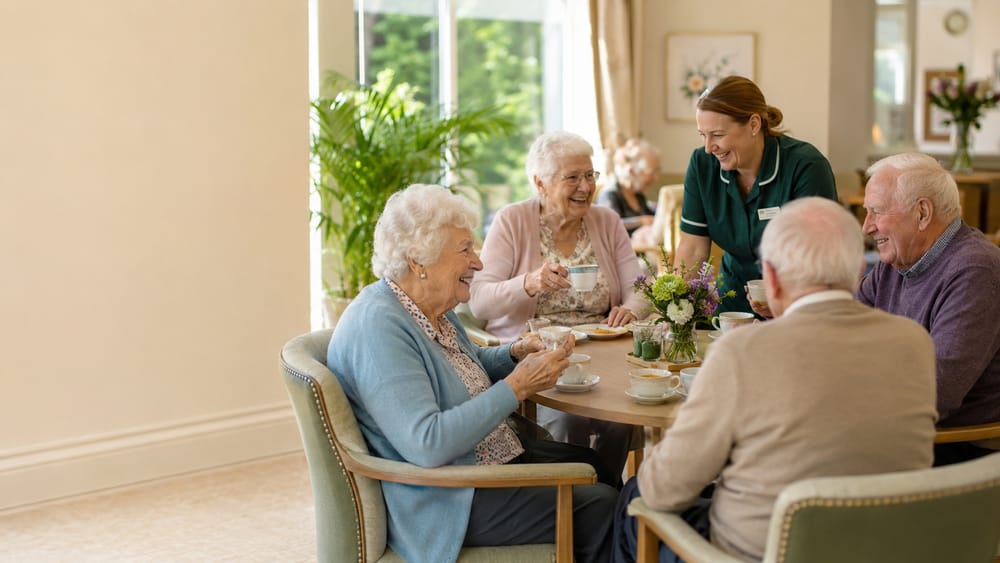
Mealtimes anchor the day and are one of the fastest ways to judge a home. Look for varied menus with real choices, dietary and cultural needs handled without fuss, and the option to eat in your room or with guests. Joining a mealtime on a visit tells you more than any inspection report.
Health professionals come to you
Residents keep their NHS entitlements. GPs, district nurses, opticians, dentists, chiropodists and physiotherapists visit care homes routinely, and homes manage the appointments and referrals. Ask each home which professionals visit, how often, and how families are kept informed after appointments.
Staying connected
Life doesn’t stop at the front door. Ask about visiting arrangements (good homes are flexible), trips out, phone and video calls, and whether family can join meals or events. If faith, clubs or a particular routine matter, ask exactly how the home will support them to continue.
The experts who support our care
- GPs and primary care teams
- District nurses
- Opticians and dentists
- Physiotherapists
- Chiropodists and podiatrists
- Hairdressers and barbers